

Heat Efficiently and Reduce Electricity Costs
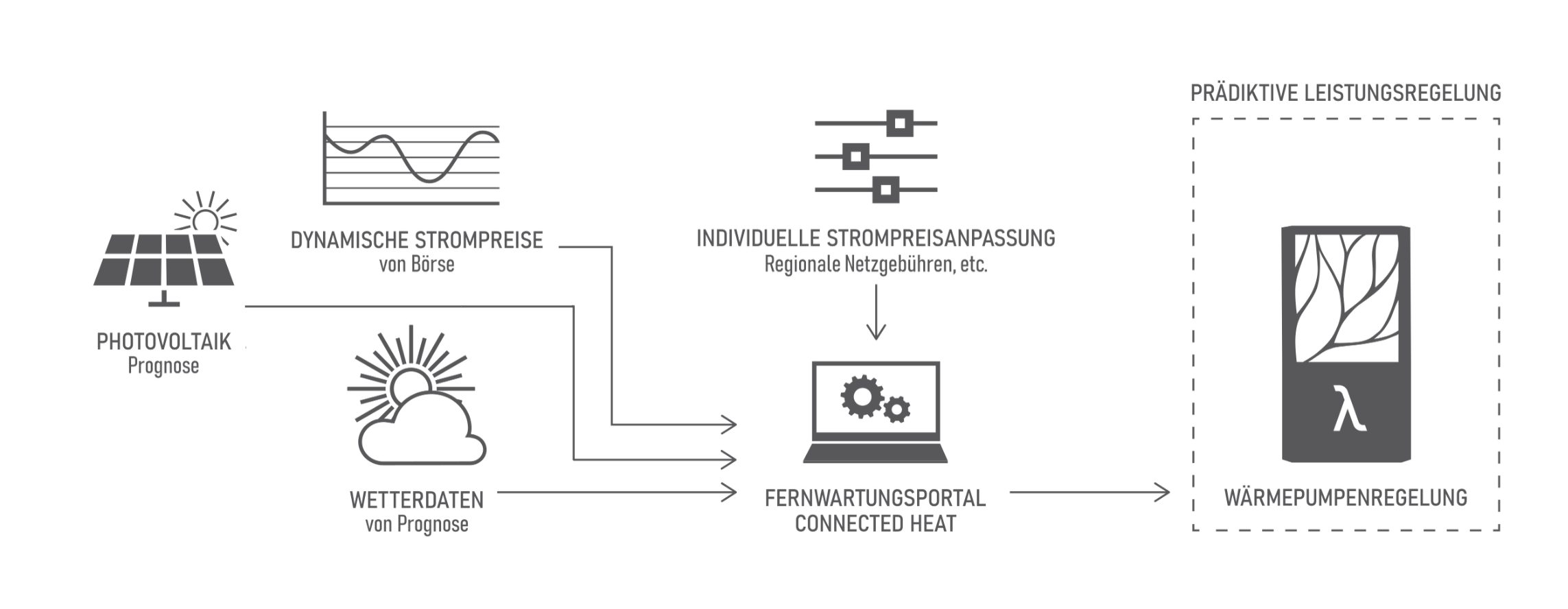
The LAMBDA Heat Schedule® is an intelligent operational optimization feature that calculates an optimal 24-hour operating strategy based on weather data, dynamic electricity prices, and PV forecasts. The goal is to minimize heating costs while meeting comfort requirements.
The Heating Schedule® processes various data sources and forecasts and uses them to calculate the optimal power distribution for heat pump operation for the coming day, with a 15-minute resolution.
The following factors, among others, are taken into account during optimization:
- Outdoor temperature: Higher outdoor temperatures improve efficiency (COP)
- Humidity (dew point): High humidity leads to more frequent defrost cycles and can reduce efficiency
- Dynamic electricity prices: Off-peak electricity rates are specifically used for heat generation
- PV forecast: Self-generated electricity reduces the amount of electricity purchased from the grid at a cost
Optimization Using Comfort Logic
Throughout the day, as part of the optimization process, rooms may be intentionally overheated or cooled. A power limit can be used to reduce any potential loss of comfort.
The Heat Schedule® is active exclusively for heating and hot water production. This function is deactivated for cooling mode.
Setpoint Configuration Using a Digital Twin
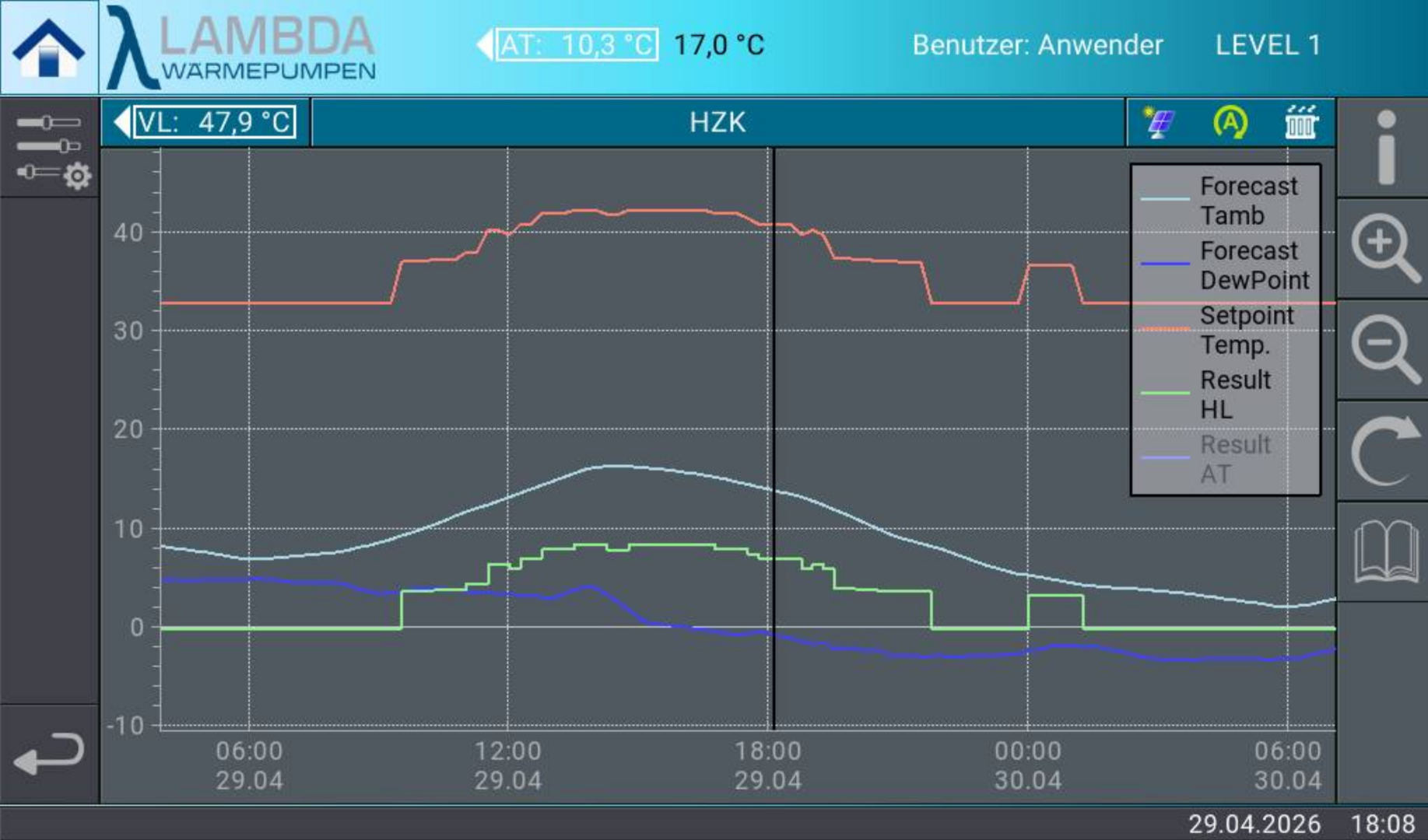
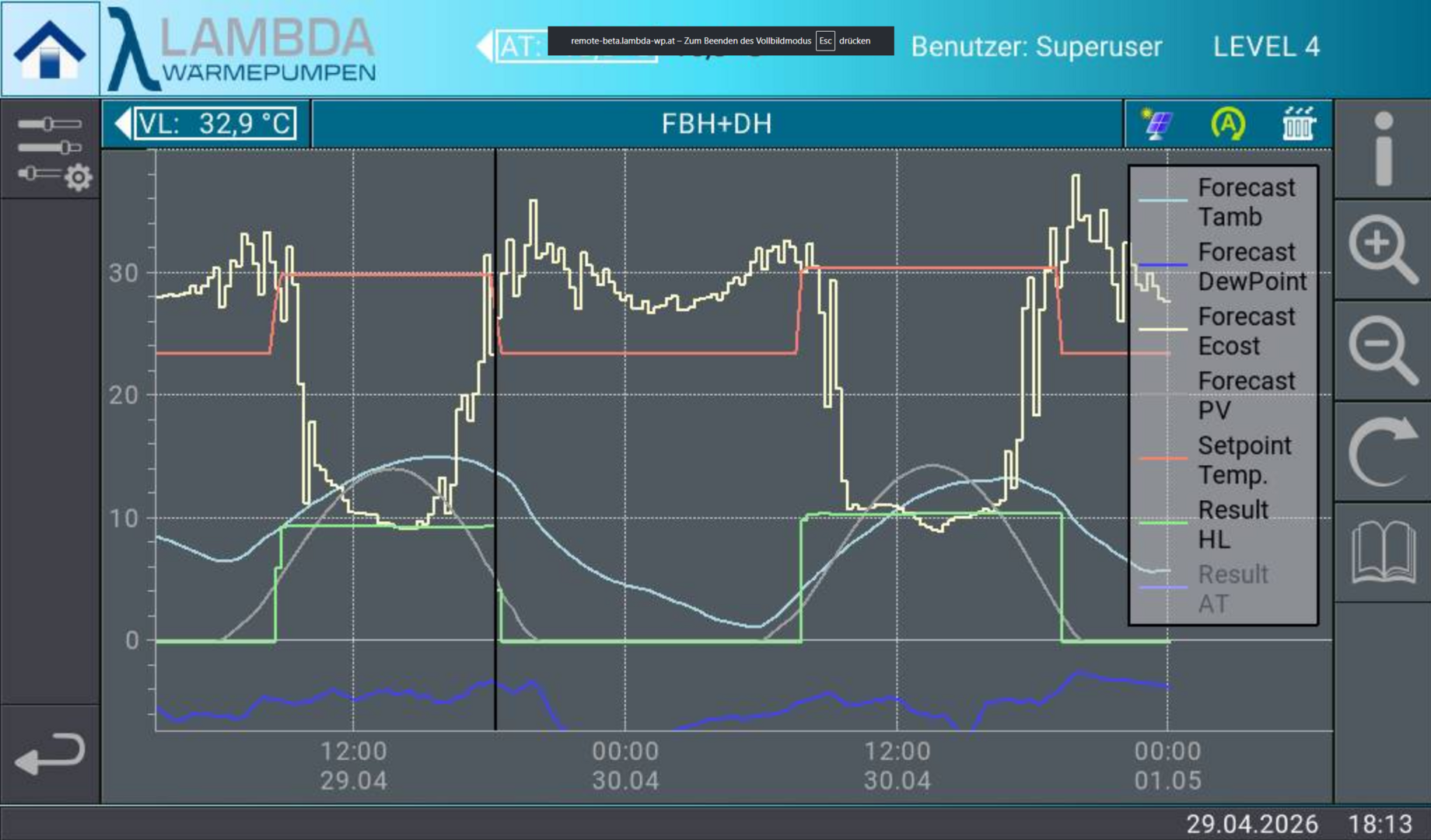
Using a digital twin in the heat pump software, the projected heating costs are calculated for any given time up to 36 hours in advance, based on expected efficiency, electricity costs, and defrost cycles. An algorithm optimizes load distribution throughout the day within comfort limits, with the goal of minimizing heating costs as much as possible over the course of the day. To ensure flexibility in responding to usage patterns and building conditions, the Heat Schedule® adjusts the threshold values for output control and modifies the setpoint temperatures of the individual modules (heating circuits, domestic hot water).
Flexible user behavior, customized buildings
Each module has its own individual Heat Schedule®.
- During off-peak, efficient operating hours, a higher flow setpoint and greater output are enabled.
- During peak-rate hours, the flow setpoint and output are reduced, thereby lowering energy consumption.
Hot water production is prioritized during the most cost-effective times of the day.
Greater Efficiency & Cost Savings
In the study, the coefficient of performance (COP) of the heat pump rose, for example, from 5.23 to as high as 5.631 for radiant floor heating systems, because heat was generated primarily during the warmer hours of the day.
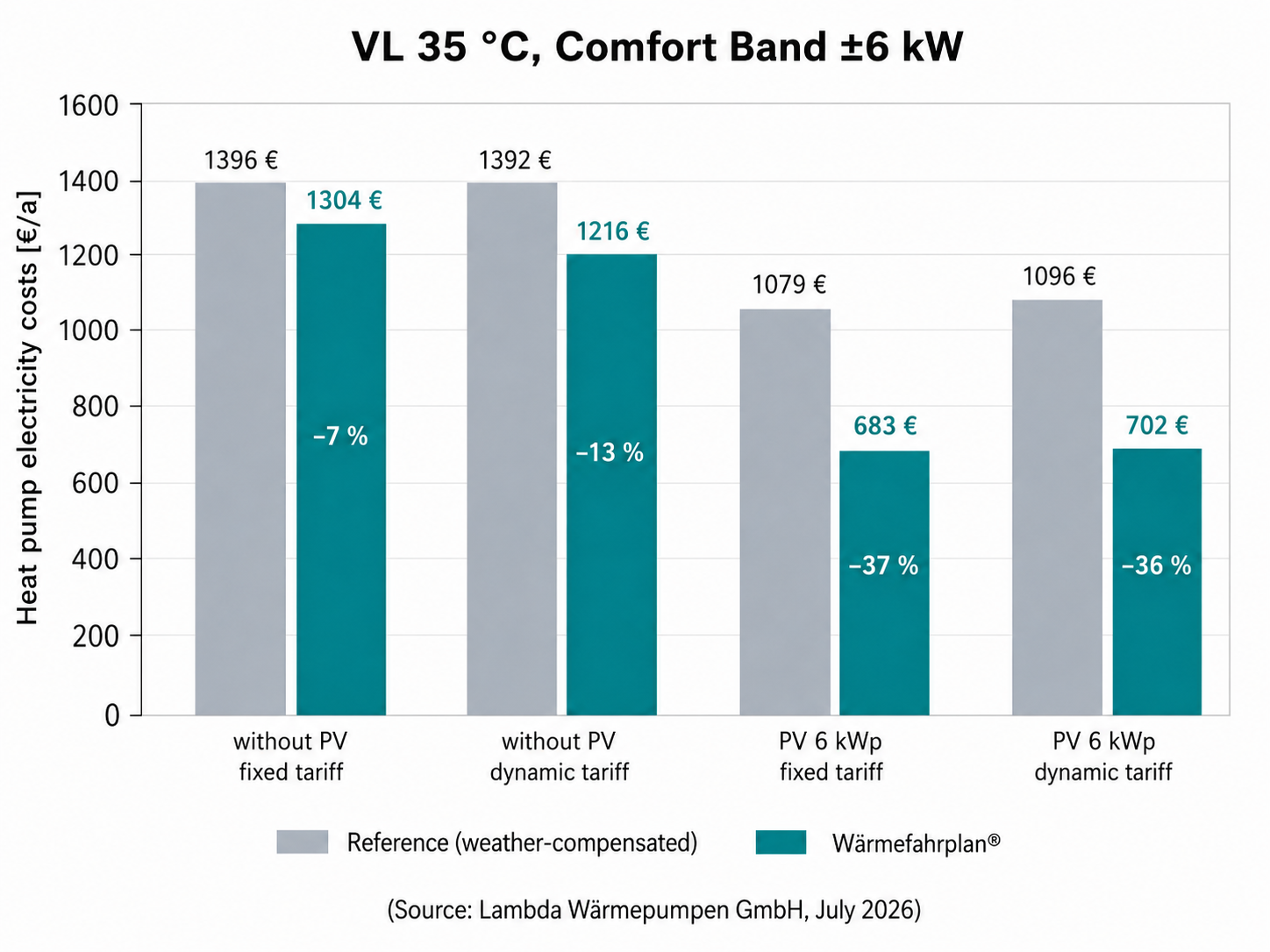
The LAMBDA Heat Schedule® reduces heat pump electricity costs by up to 37%¹, as demonstrated by the latest simulation study; this translates to savings of up to €400 per year¹—while maintaining the same amount of heat supplied.
Less icing. Less de-icing.
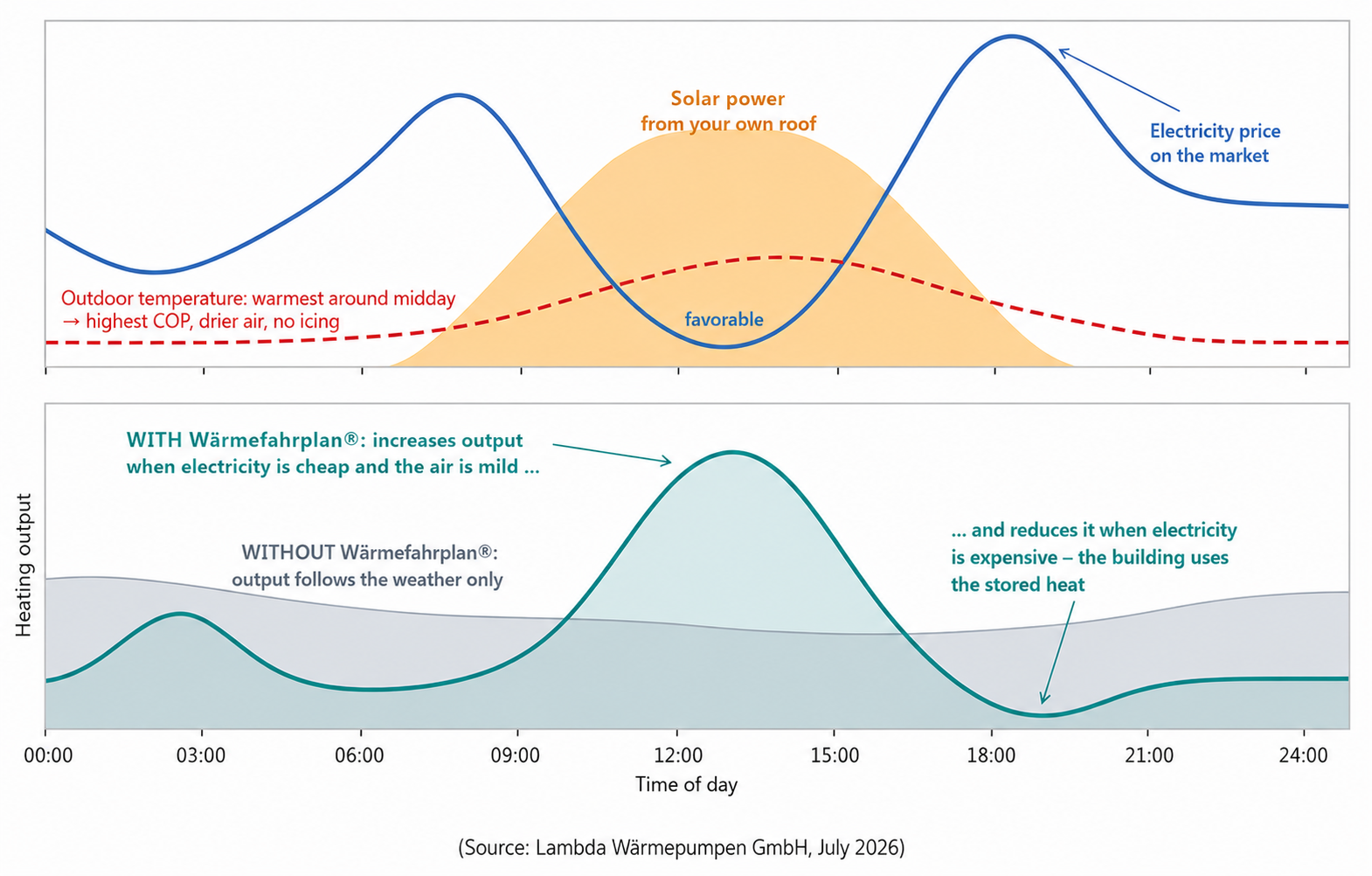
The number of full-load hours at risk of icing (heat generation below 3°C with high humidity) decreases by up to 45%¹, because the load shifts from the cold, humid night and morning hours to the drier, warmer midday hours.
Dynamic rate takes effect only with the Heat Schedule®
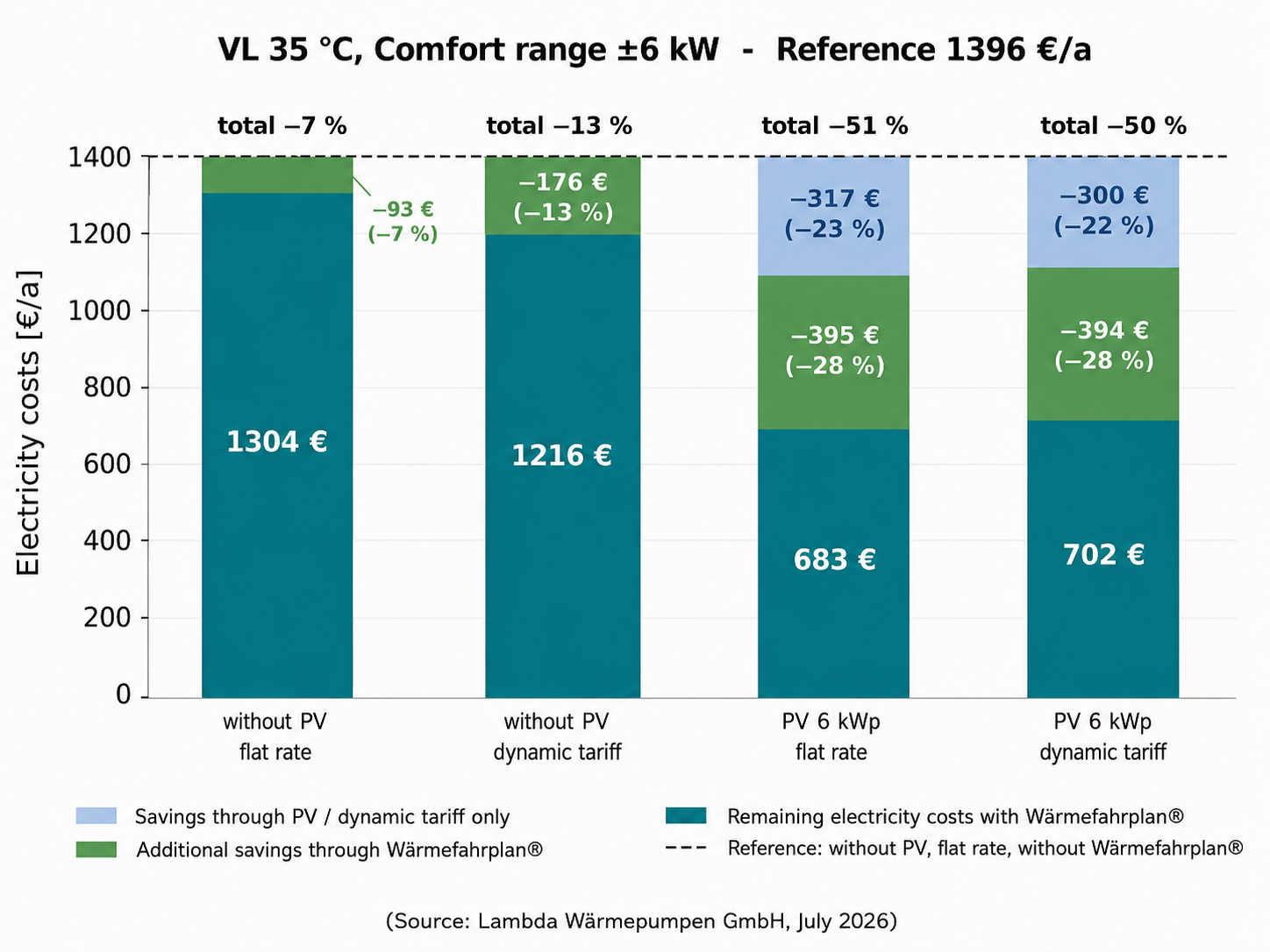
Without the Heat Schedule®, switching to a dynamic rate plan offers virtually no potential for savings in the simulated year.
However, only with the Heat Schedule® does a significant cost reduction of up to 13%¹ become apparent compared to the standard scenario.
Even without solar power and without a dynamic electricity rate plan, the Heat Schedule® reduces electricity costs.
Simply by operating during more efficient times of the day, savings of approximately €100¹ per year are possible in the cases considered.